Firepoint.

MapWildfire guide
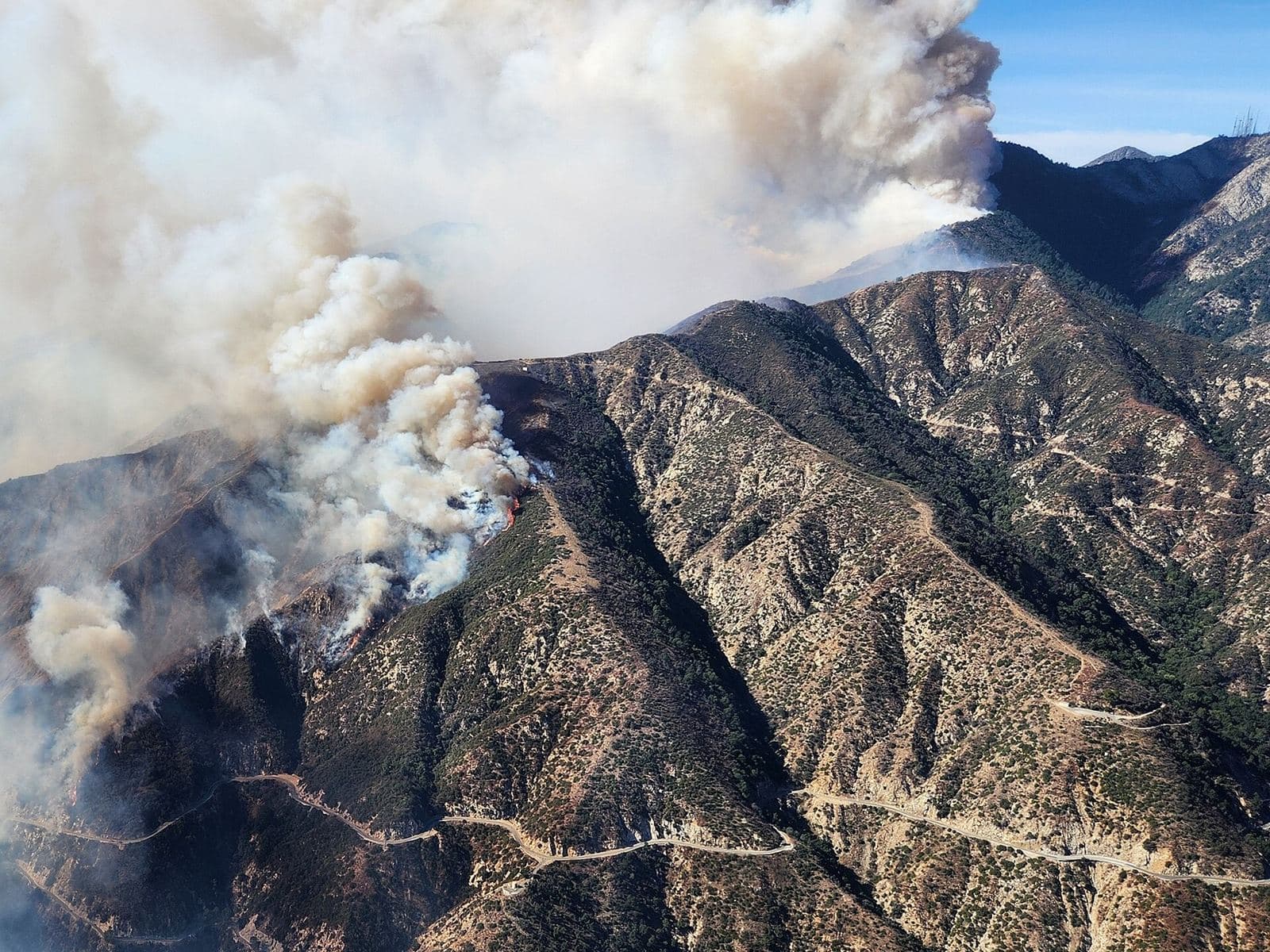
Smoke from the Eaton Fire rising over the ridges of the San Gabriel Mountains.

A wildfire guide for Glendale

Ready.
Set.
Go.

Eaton Fire, January 8, 2025. Matt Muller, USDA Forest Service · public domain (opens in a new tab)

Wildfires here are fed by dry brush and driven by strong, dry winds, and very few residents prepare to evacuate until it is too late. This is what firefighters ask you to do: before fire season, when a fire is near, and when it’s time to leave. Based on the LA County Fire Department’s Ready! Set! Go! plan.

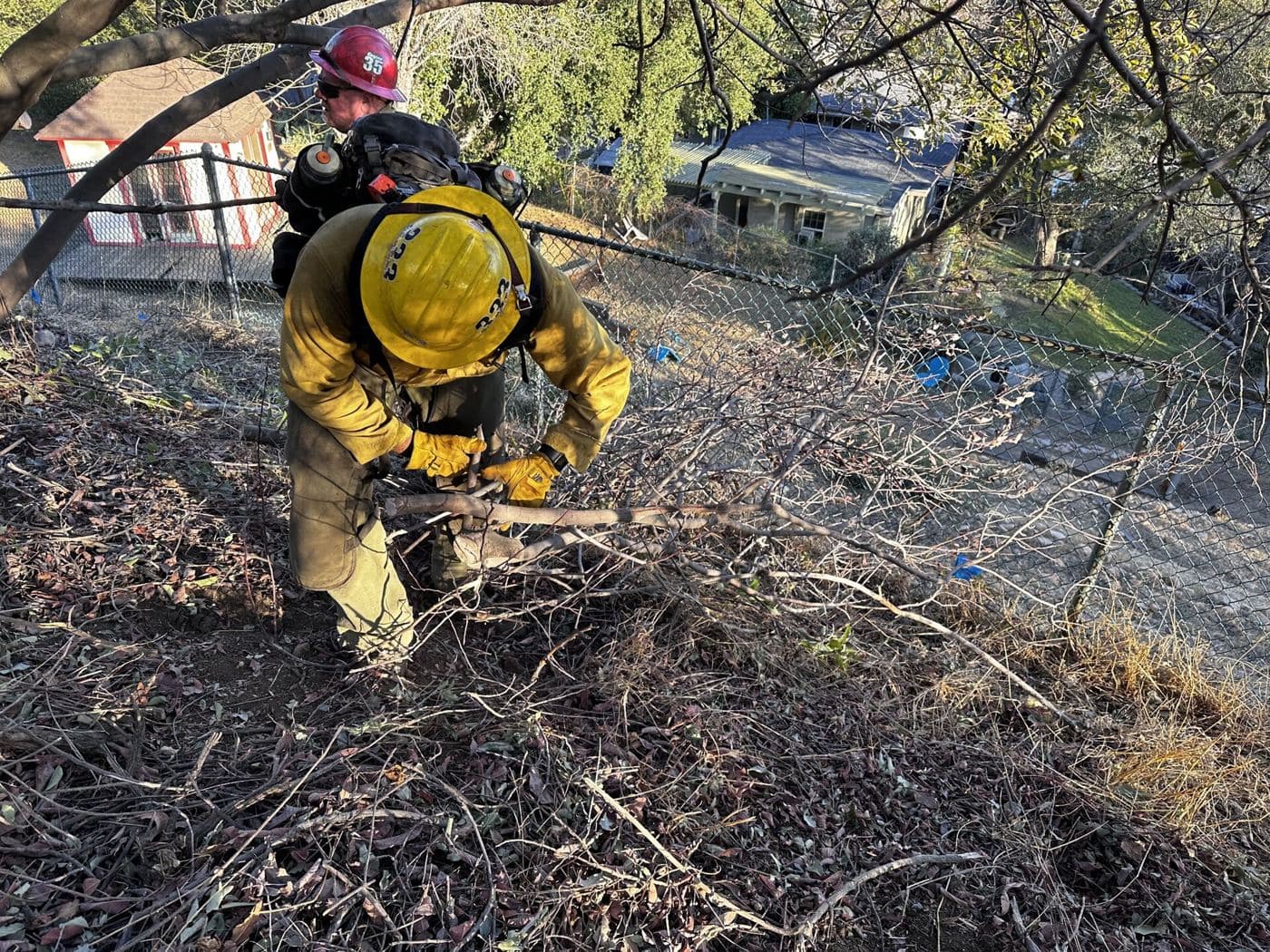
Firefighters cutting and clearing dry brush on a slope below a house.

Chapter I · Your home

Ready!

Clear the space around your house and seal it against embers.

Crews clear brush behind homes near Altadena. USDA Forest Service · public domain (opens in a new tab)

Defensible space

Defensible space is the buffer between your house and the landscape around it. It slows a fire down and gives firefighters room to stand between your home and the flames. It runs 200 feet out, in three zones.

30 ft100 ft200 ft
Three zones, 200 feet in all. Your house sits at the center.

Zone 1 0–30 ft

  • Remove dead leaves, needles, weeds and debris from the yard, roof, gutters, decks and stairs.
  • Cut branches back 10 feet from any chimney or stovepipe.
  • Keep plants low, watered and widely spaced. No hedges within 5 feet of the house.
  • Move firewood and lumber out to Zone 2.

Zone 2 30–100 ft

  • Mow annual grass to 3 inches or less.
  • Space trees and shrubs apart, about three times their height.
  • Clear fallen leaves, twigs, bark and small branches.

Zone 3 100–200 ft

  • Thin native brush by 30 to 50 percent.
  • Remove the lower third of large shrubs and all dead wood.
  • Limb trees up at least 6 feet.

“Windblown embers from a wildfire will find the weak link in your home’s fire protection scheme.”

Ready! Set! Go! Wildfire Action Plan

Harden your home

  1. RoofThe most vulnerable part of a home. Use composition, metal or tile, keep it clear of needles and leaves, and cut branches back 10 feet.
  2. VentsCover with 1/8-inch metal mesh. Fiberglass and plastic mesh melt.
  3. WindowsHeat can break windows before a house ignites. Dual-pane with tempered outer glass resists breaking.
  4. Eaves & guttersBox in eaves with non-combustible material. Screen or enclose gutters.
  5. DeckKeep it clear of furniture and anything that burns. Enclose the underside.
  6. ChimneyCover outlets with 1/8-inch non-flammable mesh.
  7. GarageKeep a fire extinguisher, shovel, rake and bucket. Keep the door closed.
  8. AddressNumbers at least 4 inches tall, in a contrasting color, visible from the road.
  9. WaterHoses long enough to reach every side of the house.
  10. UtilitiesEveryone in the household should know how to shut off gas, electricity and water.
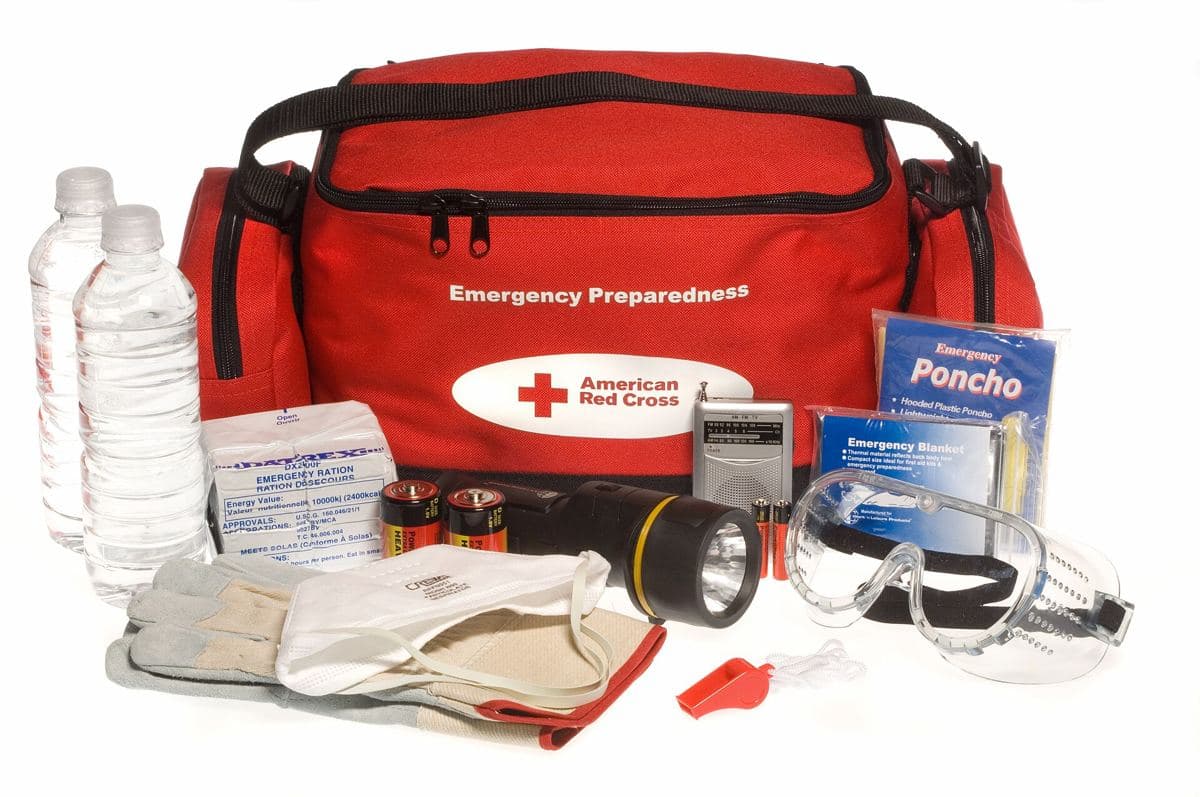
An emergency supply bag with water bottles, a flashlight, batteries, gloves, goggles, a whistle and a poncho.

Chapter II · Your family

Set!

Make a plan, pack a kit, and know what to do before you leave.

A ready-to-go supply kit. FEMA / American Red Cross · public domain (opens in a new tab)

Your wildfire action plan

Make it with everyone in your household, well before fire season. Practice it, and post it where you can find it fast.

Who to call
Pick one out-of-area friend or relative everyone checks in with. Post emergency numbers by the phone and in your kit.
Where to meet
Choose a meeting place outside the fire area, so you know who got out.
How to get there
Know several routes out of your neighborhood and practice them.
What to take
An emergency supply kit for each person, and a spare kit in the car.
Your animals
Pack pet supplies. Plan transport for large animals and move them early.

One per person

Emergency supply kit

A backpack works well. Keep food and water in a tub you can lift into the car.

  • Three days of non-perishable food and three gallons of water per person
  • Map marked with at least two evacuation routes
  • Prescriptions or special medications
  • Change of clothing and closed-toe shoes
  • Extra eyeglasses or contact lenses
  • Extra car keys, credit cards and cash
  • First aid kit
  • Flashlight
  • Battery-powered radio and extra batteries
  • Sanitation supplies
  • Copies of important documents
  • Food and water for your pets

Remember the six P’s

If you have minutes, not hours, grab these.

  1. Peopleand pets
  2. Papersphone numbers and important documents
  3. Prescriptionsvitamins and eyeglasses
  4. Picturesand irreplaceable memorabilia
  5. Personal computerhard drives and flash drives
  6. Plasticcredit cards, ATM cards and cash

If an evacuation is coming and there’s time

Animals

  • Find your pets and keep them close.
  • Get large animals ready to move, and move them early.

Inside

  • Shut all windows and doors.
  • Take down flammable curtains and shades. Close metal shutters.
  • Move furniture to the center of rooms, away from windows.
  • Leave lights on so firefighters can see the house in smoke.
  • Turn off the air conditioning.

Outside

  • Bring in patio furniture, toys and doormats.
  • Turn off propane tanks. Move grills away from the house.
  • Connect garden hoses for firefighters, but leave sprinklers off. They drain water pressure.
  • Put your kit in the car. Back it into the driveway, windows closed, keys with you.
  • Check on your neighbors.
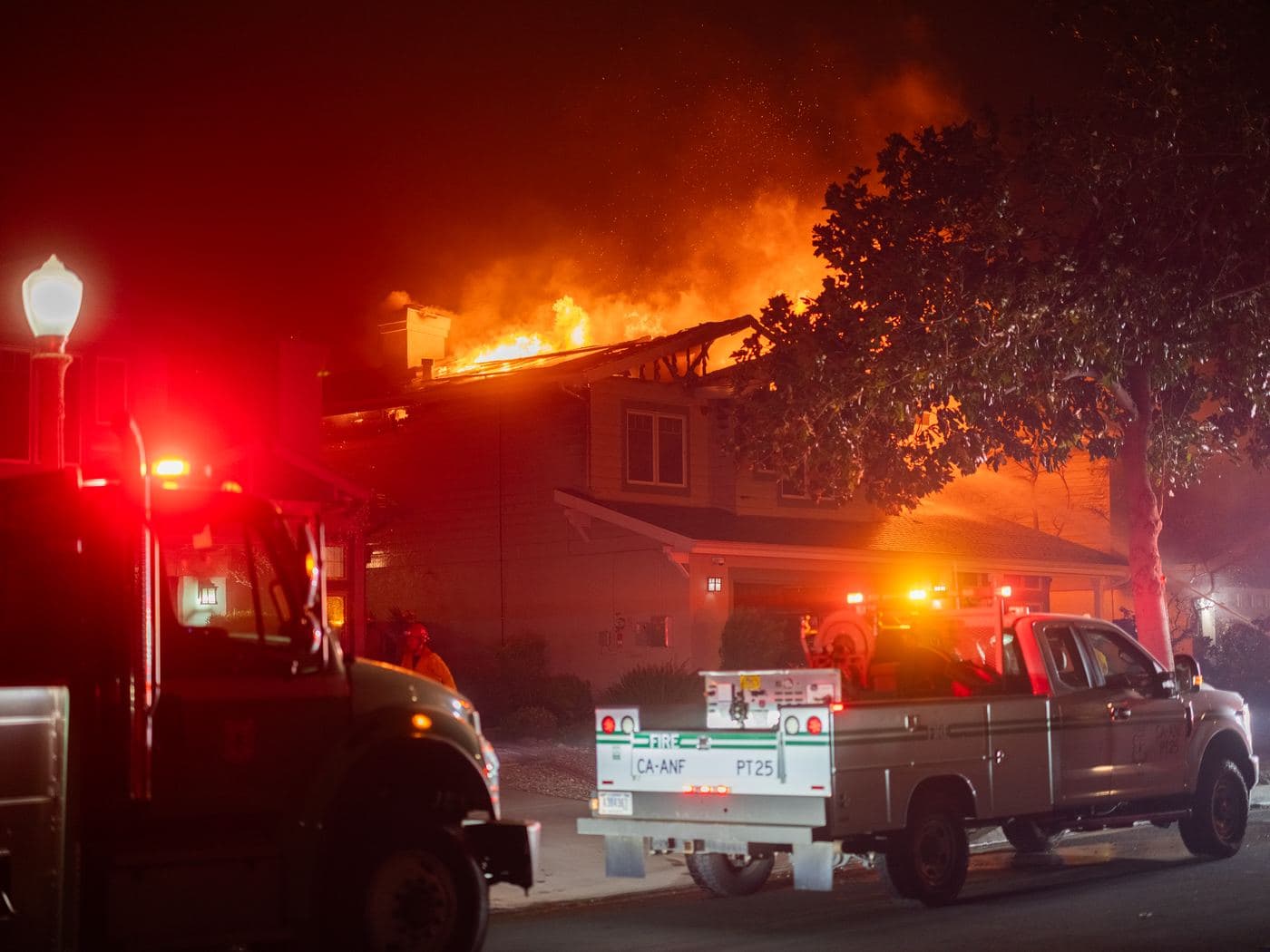
Fire engines on a residential street at night while a house burns.

Chapter III · Leaving

Go!

Leave early, know the official terms, and what to do if trapped.

Initial attack on the Eaton Fire. USDA Forest Service · public domain (opens in a new tab)

“By leaving early, you will give your family the best chance of surviving a wildfire.”

Ready! Set! Go! Wildfire Action Plan

Know the official terms

Officials use these words in alerts. Follow them immediately. Check Know Your Zone (opens in a new tab) for your area.

Evacuation Warning
Potential threat to life and/or property. Those who require additional time to evacuate, and those with pets and livestock, should leave now.
Evacuation Order
Immediate threat to life. This is a lawful order to leave now. The area is lawfully closed to public access.
Shelter in Place
Go indoors. Shut and lock doors and windows. Prepare to self-sustain until further notice and/or contacted by emergency personnel for additional direction.

Terms quoted from Cal OES · Standard evacuation terms (opens in a new tab).

When a wildfire starts

  1. Leave early. Don’t wait to be told if you feel threatened. In a fast fire there may be no time to warn everyone.
  2. Follow instructions from officials immediately.
  3. Go to a place you chose ahead of time, outside the fire area: an evacuation center, a shelter or a motel.
  4. Take a route away from the fire, and have a backup in case roads are blocked.
  5. Wear long sleeves, long pants, heavy shoes, a cap, goggles and a dry bandanna. Cotton is best.
  6. Take your pets. Make sure your kit is in the car.
  7. Tell family and friends where you are going.

If you become trapped

Stay calm. Call 911 and tell them where you are.

At home

  • Call 911 and give your location.
  • Shut off the gas meter. Fill sinks and tubs with water.
  • Keep doors and windows closed but unlocked. Take down curtains.
  • Turn lights on inside and out.
  • Stay inside, away from outside walls.

In a car

  • Park away from vegetation.
  • Close all windows and vents.
  • Cover yourself with a wool or cotton blanket or jacket.
  • Lie on the floor.
  • Call 911 and give your location.

On foot

  • Go to an area clear of vegetation, or a ditch or low spot on level ground.
  • Lie face down and cover your body.
  • Call 911 and give your location.

Coming home

  • Don’t return until officials say it is safe.
  • Watch for downed power lines.
  • Check propane tanks, regulators and lines before turning gas on.
  • Check the house carefully for hidden embers.

Keep these open

Firepoint only explains the guidance. For orders, zones and conditions, go to the source.

Genasys Protect opens a third-party map centered on Glendale, not a Firepoint zone lookup. Search your address there and check the issuing agency. A blank map does not establish safety.